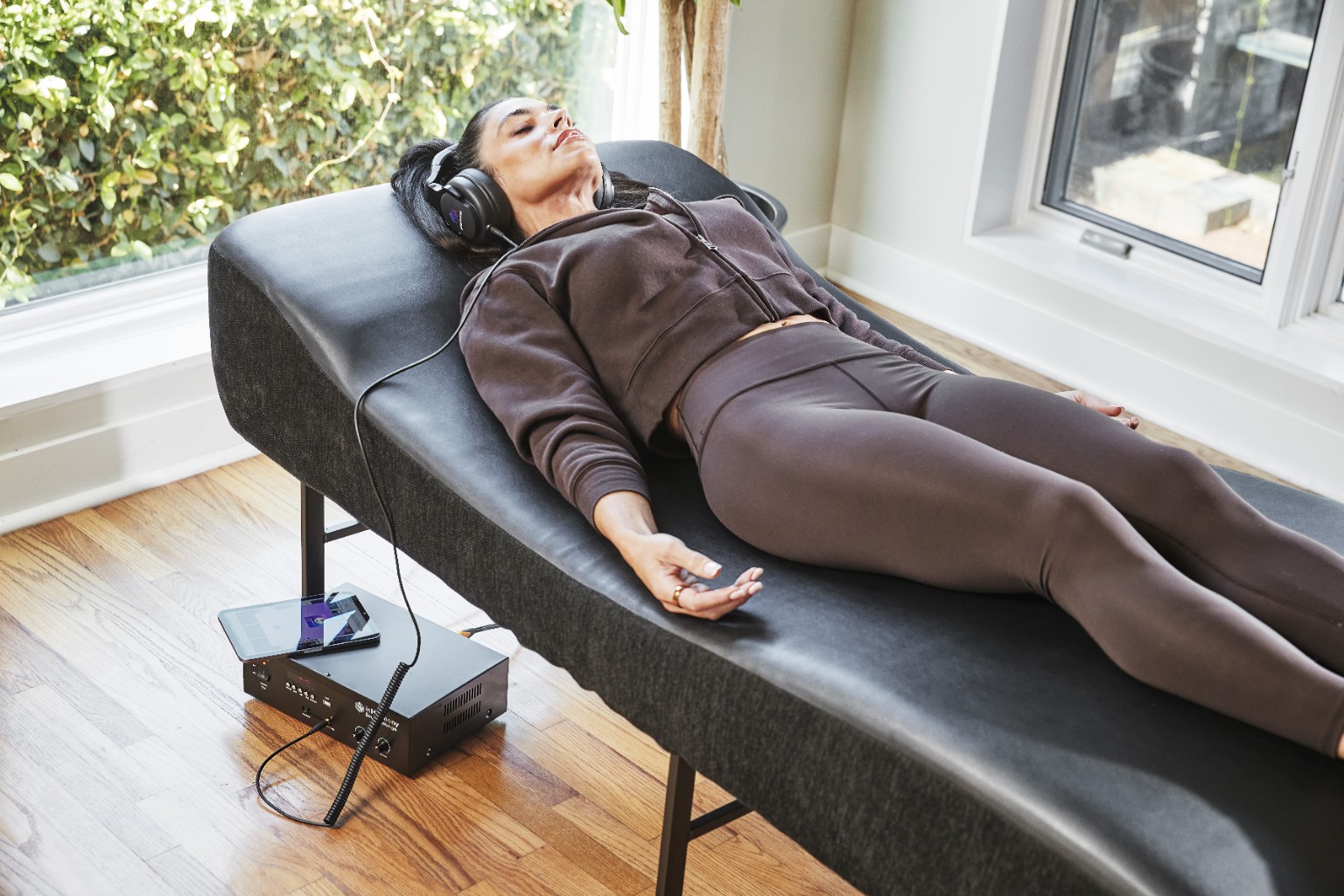
Vibroacoustic therapy combines low-frequency sound with physical vibration delivered through a specially designed mat, chair, table or lounge. You hear the audio and feel the vibration while sitting or lying comfortably. It is a complementary approach explored for relaxation and in research on certain health conditions. [1, 2]
If you’re curious about vibroacoustic therapy in Mandurah or the Peel region, this beginner guide explains the experience, the evidence and what to ask before booking. You don’t need meditation experience to begin.
What is vibroacoustic therapy
Often shortened to VAT, vibroacoustic therapy is a form of sound-based practice with a physical sensation. The word “vibro” refers to vibration; “acoustic” refers to sound. Music, low tones or other audio may form part of a session.
How does vibroacoustic therapy work
Components called transducers turn an audio signal into physical vibration. Built into or attached to the equipment, they transmit vibration through the supporting surface. Speakers or headphones provide the sound you listen to. Research protocols and commercial systems vary, so two providers may offer quite different experiences. [1, 2]
What vibroacoustic therapy feels like
Think of the low bass you can feel near a speaker, delivered through the surface beneath you at an adjustable intensity. Depending on the equipment and audio, the sensation may feel like a gentle hum, pulsing or changing patterns of vibration.
Some people find the sensation soothing. Others need a quieter sound, lower intensity or more time to get comfortable. You might notice your shoulders soften, feel sleepy, stay quite alert or simply enjoy lying down. There is no particular response you have to produce.
You do not have to be good at meditation
You can arrive with a busy mind. There is no need to empty it, force deep breathing or concentrate perfectly. If your thoughts wander to dinner or the washing, you haven’t failed the session. You can gently notice the sound or the support underneath you again, if that feels comfortable.
What to expect at a vibroacoustic therapy session
A conversation before you begin
Your practitioner should explain the equipment, ask about your health and sensory preferences, and discuss what you would like from the session. Ask about the session length and anything you are unsure about.
Time to get comfortable
You usually remain fully clothed. Comfortable clothing, a supported position and an explanation of how to ask for changes can make the experience easier to approach.
Sound and vibration at your pace
The intensity should suit your comfort. You can ask for adjustments, keep your eyes open, change position or stop. Stronger vibration is not a measure of a better session.
A gentle finish
Give yourself a moment to sit up and notice how you feel. Let the practitioner know about discomfort or anything you would want changed next time.
Possible benefits of vibroacoustic therapy
People may seek out VAT for relaxation, a supported pause during a stressful period, or curiosity about a sensory approach to rest. These are reasons to try an experience, rather than promises about what it will do for you.
For someone who finds silent meditation frustrating, having sound and a physical sensation to notice may feel more approachable. For someone sensitive to sound or vibration, the same experience may feel too much. Your preference matters.
Vibroacoustic therapy research and evidence
Vibroacoustic approaches have been studied in particular clinical settings, including fibromyalgia and rehabilitation. The findings need to be read alongside the study design and the specific equipment used.
A 2015 study involving 19 women with fibromyalgia reported improvements in symptoms and sleep after a course of low-frequency sound stimulation. It had no control group, so it could not establish whether the sound stimulation caused those changes. [1]
A 2019 randomised study involving 24 people after knee ligament reconstruction reported benefits on some measures when local vibroacoustic stimulation was added to rehabilitation. That small, specific study does not establish what a general wellness session will do for someone experiencing everyday stress. [2]
These findings justify further investigation. They do not establish a reliable benefit for every person, condition or commercial device. A restful session and a proven treatment for a health condition are different claims.
What about special frequencies
Frequency means how many times something vibrates each second, measured in hertz, or Hz. A frequency used in a study is part of that study’s protocol. It is not a prescription for everyone, and feeling a vibration does not tell you what your brainwaves are doing.
Be cautious with promises that one frequency will heal trauma, cure anxiety or reset your whole nervous system. A practitioner should be able to explain the experience without needing to promise a cure.
Comfort and suitability come first
Before booking, share relevant health information, any implanted medical devices and any difficulty with sound, vibration or lying down. Ask the practitioner to check the equipment’s safety guidance and whether advice from your treating health professional is needed.
During the session, speak up if you feel uncomfortable, dizzy, overstimulated or distressed. You do not need to push through a sensation to benefit. Pausing or stopping is always a valid choice.
Vibroacoustic therapy frequently asked questions
Is vibroacoustic therapy the same as massage
A massage practitioner works on your body with their hands or tools. VAT delivers sound-driven vibration through equipment. It may feel massage-like, but the method is different.
How is vibroacoustic therapy different from a sound bath
A sound bath usually centres on listening to instruments such as bowls or gongs. VAT uses equipment that transmits physical vibration through the surface supporting you. Sound and vibration can also be combined with other practices.
Is hypnosis part of every session
No. VAT and hypnotherapy are separate approaches. A practitioner may offer them together, but should explain what is included and obtain your agreement before beginning.
Can vibroacoustic therapy help with sleep
You may feel sleepy or more settled, but a session cannot guarantee better sleep that night or treat the cause of ongoing insomnia. Persistent sleep problems deserve an assessment from a qualified health professional.
Vibroacoustic therapy near Mandurah and South Yunderup
KOVE Mind & Body is based in South Yunderup in Western Australia’s Peel region. If you’re looking for vibroacoustic therapy near Mandurah, get in touch to ask about current one-to-one sessions, suitability and what your first visit would involve. The starting point is understanding what feels comfortable for you. You can ask questions before deciding.
Explore vibroacoustic sessions with KOVE Mind & Body
General education only. Vibroacoustic therapy is a complementary approach and does not replace medical or mental health care. Individual experiences vary.
Research sources
[1] Naghdi et al. 2015 — Low-frequency sound stimulation in fibromyalgia
[2] Park et al. 2019 — Rehabilitation combined with local vibroacoustics
← Back to all stories