Have you ever been completely exhausted, but the moment you finally sit down to relax, your mind starts going a hundred miles an hour?
You're thinking about tomorrow, replaying yesterday or mentally working through everything you still need to do.
Your body feels tired, but somehow you're still switched on.
It's something many of us recognise.
And it raises an interesting question.
What if relaxation didn't have to start with your thoughts? What if you could begin with what your body feels?
That's one of the reasons I'm so interested in vibroacoustic therapy.
What Exactly Is Vibroacoustic Therapy?
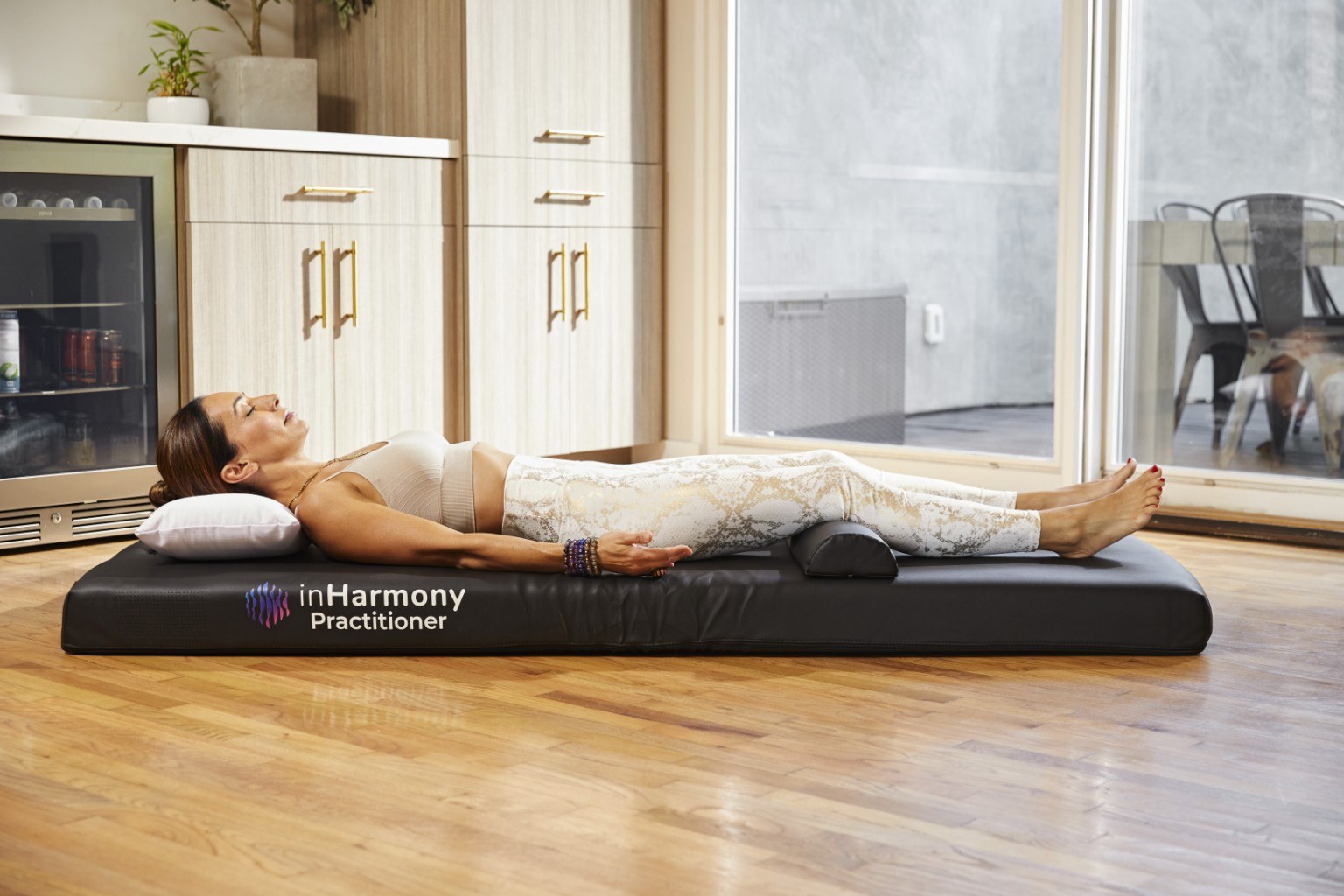
Vibroacoustic therapy (VAT) uses low-frequency sound vibrations delivered through specialised equipment, such as a therapy table, mat or sound lounge.
Unlike ordinary music, which you primarily experience through your ears, vibroacoustic therapy allows you to physically feel the vibrations through your body.
Imagine lying comfortably, listening to calming music, while gentle rhythmic vibrations move through the surface beneath you.
You don't have to meditate perfectly, concentrate on your breathing or try to stop thinking.
You simply have the opportunity to rest and experience the sound.
Some people describe it as a gentle internal massage. Others notice a sense of heaviness, warmth, calm or simply the enjoyment of having nothing they need to do.
Everyone experiences it differently.
The Connection Between Your Mind and Body
We often talk about stress as though it happens entirely in our heads.
But think about what happens when you're overwhelmed.
Your shoulders might creep up towards your ears. Your jaw tightens. Your breathing becomes shallow. You might feel restless, unsettled or unable to properly unwind.
Our minds and bodies are constantly communicating.
This is why relaxation isn't always as simple as telling yourself to calm down.
Sometimes, focusing on a comfortable physical sensation can make it easier to settle your attention and experience a moment of rest.
Vibroacoustic therapy offers one way of exploring that connection through sound and vibration.
How Does Vibroacoustic Therapy Work?
Inside specialised vibroacoustic equipment are components called transducers.
These convert low-frequency audio signals into physical vibrations that travel through the surface you're resting on.
Different frequencies, rhythms and vibration intensities produce different physical sensations.
The early development of vibroacoustic therapy is closely associated with Norwegian pioneer Olav Skille, who explored the therapeutic use of low-frequency sound.
Today, researchers continue to investigate how these vibrations interact with sensory perception, the nervous system and our experience of relaxation.
It's fascinating because we're not just listening to sound. We're experiencing it physically.
What Does the Research Say About Vibroacoustic Therapy?
Vibroacoustic therapy has been explored in research investigating relaxation, stress, pain and the body's physiological responses to low-frequency vibration.
A 2024 study published in Sensors examined vibroacoustic stimulation in 38 adults. Researchers observed changes in physiological measures associated with relaxation, including aspects of heart rate variability and brain activity.
A 2022 scoping review published in BMJ Open examined 20 studies investigating vibroacoustic therapy in adults experiencing pain, reflecting the interest in its potential applications.
Researchers have also explored how low-frequency sound and vibration may influence mood, sensory experiences and relaxation.
What makes this area particularly interesting is the interaction between sound, physical sensation and our awareness of the body.
Vibroacoustic therapy brings together sound and touch in a distinctive experience that researchers continue to explore for its potential wellbeing applications.
What Happens During a Vibroacoustic Session at KOVE?
At KOVE Mind & Body, the focus is on creating a comfortable space where you can take some time away from the demands of everyday life.
During a vibroacoustic session, you'll rest on specialised equipment while low-frequency vibrations are delivered through the surface beneath you.
Music or sound may accompany the experience.
There's no pressure to achieve a particular feeling.
You might close your eyes. You might notice your breathing naturally settling. Your mind might wander, or you might feel completely absorbed in the sensations.
And if something doesn't feel comfortable, we can adjust the experience or stop.
The important thing is that you remain in control of your session.
Why I Combine Vibroacoustic Therapy With Hypnotherapy
At KOVE, my approach is centred on something I believe is incredibly important:
Mind and body working together.
As an RTT hypnotherapy practitioner, I work with the thoughts, beliefs and patterns that can influence how people experience themselves and their lives.
But I've also become very interested in what happens physically when we're stressed, overwhelmed or finding it difficult to relax.
That's why I offer vibroacoustic therapy both as an individual experience and alongside Rapid Transformational Therapy (RTT).
They're different approaches, but I see value in considering both the psychological and physical experience of relaxation.
The idea isn't that vibrations magically change your thoughts or that hypnotherapy instantly resolves everything.
It's about creating an environment where you can feel comfortable, explore your experiences and take meaningful steps towards the changes you want.
Who Might Enjoy Vibroacoustic Therapy?
You don't need to be experiencing a particular problem to explore vibroacoustic therapy.
Perhaps you've been feeling mentally busy, struggling to find quiet time, or simply curious about an approach to relaxation that feels a little different.
It may appeal to people interested in sound-based wellbeing, sensory relaxation, meditation or gentle mind–body practices.
And if traditional meditation feels frustrating because you're constantly being told to clear your mind, you may appreciate having something physical to focus on.
Vibroacoustic therapy isn't suitable for everyone. Certain medical conditions, implanted devices, pregnancy, recent injuries or sensitivity to sound and vibration may require additional precautions or medical advice before a session.
Frequently Asked Questions
Is vibroacoustic therapy the same as a sound bath?
Not quite. A traditional sound bath usually involves listening to instruments such as singing bowls or gongs. Vibroacoustic therapy uses specialised technology to transmit low-frequency sound as physical vibration directly through the surface you're resting on.
Do I have to meditate during the session?
Not at all. You can simply lie comfortably and experience the vibrations. There's no special technique you need to master.
Can vibroacoustic therapy help with stress or sleep?
Vibroacoustic therapy is being researched for its potential applications in relaxation, stress management and sleep wellbeing. Many people explore it as part of their personal relaxation routine. Individual experiences vary, and it isn't a replacement for medical care for sleep disorders or other health conditions.
Where can I try vibroacoustic therapy near Mandurah?
KOVE Mind & Body offers individual vibroacoustic therapy experiences in the Mandurah and Peel region of Western Australia.
You Don't Always Have to Think Your Way Into Relaxation
We spend so much of our lives thinking, planning, organising and trying to keep everything together.
Sometimes it's worth giving ourselves an opportunity to experience something different.
A little less doing.
A little more noticing.
And perhaps an opportunity to feel what rest is like, without putting pressure on yourself to get it right.
At KOVE Mind & Body, that's what I want people to experience: a welcoming space where mind and body are both considered.
Curious about vibroacoustic therapy?
Explore individual sessions and mind–body experiences at KOVE Mind & Body.
Based in South Yunderup, supporting clients across Mandurah and the Peel region.
Research and Further Reading
Fooks, C. & Niebuhr, O. (2024). Effects of Vibroacoustic Stimulation on Psychological, Physiological, and Cognitive Stress. Sensors.
Kantor, J. et al. (2022). Exploring Vibroacoustic Therapy in Adults Experiencing Pain: A Scoping Review. BMJ Open.
Vilímek, Z. et al. (2022). The Effect of Low Frequency Sound on Heart Rate Variability and Subjective Perception. Healthcare.
This article is educational and does not constitute medical advice. Vibroacoustic therapy is a complementary wellbeing approach and is not a substitute for medical or psychological treatment.
← Back to all stories